
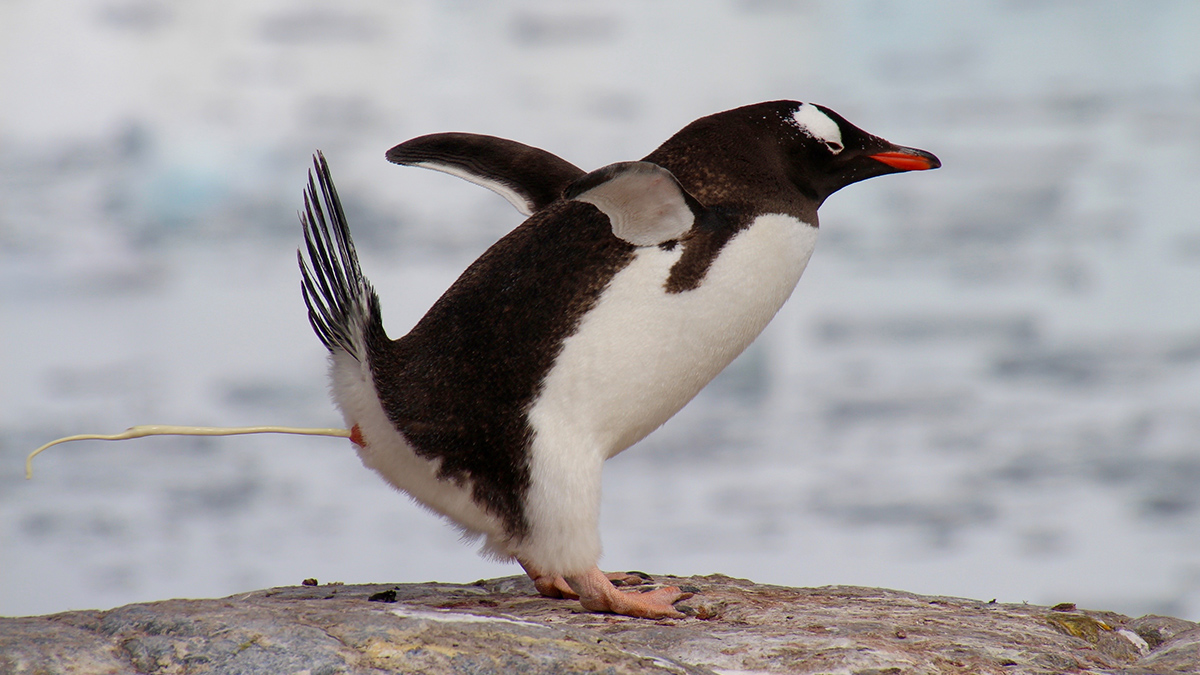
Learning from penguin poop
C1 Graded ~4 dk okuma 514 kelime

Learning from penguin poop

Sütunlar:
Yazı:
Uygulamada Aç
🇬🇧

English (Original)

Original Text

The unique features of penguin poop have allowed scientists to make a remarkable discovery. The faeces of Adelie penguins, which live along the Antarctic coast and its islands, have a unique colour. They are bright pink due to the penguins’ diet, which consists largely of pink creatures called krill. They eat so much of it that their plentiful poop stains the ground on which they live, as well as their own bodies. Moreover, they produce so much poop that the pink stains can be seen from space.

This attribute has been useful for scientists studying these birds, as it has allowed them to locate colonies of penguins using satellite images. It isn’t possible to see individual penguins in satellite photos, but the pink stains are easy to identify. Scientists can even estimate the size of the colony from the size of the pink area.

Researchers using this method were, until recently, reasonably certain that they knew the whereabouts of all the Adelie penguin colonies on the continent. However, a colleague at NASA then developed an algorithm which automatically detected these stains, rather than finding them by human eye. The computer programme identified many more pink patches that the researchers had previously overlooked, particularly in the Danger Islands.

Researcher Heather Lynch admitted that the researchers had probably missed these colonies because they never expected to find them there. As the name suggests, the Danger Islands are difficult to get to and are almost always covered in sea ice. They are so small that they don’t even appear on many maps of Antarctica. However, once the researchers were aware of the colonies, they completed a full survey. They discovered 1.5 million penguins in this small area, more than in the rest of Antarctica.

Although this seems a large number, research findings suggest that it is lower than previous years. By studying satellite images from the past, which date back to 1982, the team were able to deduce that penguin numbers peaked in the late 1990s, and have since declined by 10-20%. Krill fishing is one of the main causes for the population decline of penguins in Antarctica, but because the Danger Islands are normally surrounded by sea ice, there is less human activity here than in other parts of the continent. This leads researchers to believe that the recent decline is due to other factors, such as climate change.

The scientists are now conducting research in the area to better understand the species and the long-term health of the colonies. One team, for example, is analysing the colour and content of the poop to investigate changes in the birds’ diet. This can show the extent to which penguins are affected by commercial fishing. Another is digging holes to learn more about the penguins’ past. By radiocarbon dating the bones and eggshells found in these holes, the team have discovered that the penguins have been inhabiting these islands since 2,800 years ago. By learning more about the penguin population of Antarctica, the team hopes to understand more about the impact of human activity on the natural world.


🇹🇷

Türkçe (Çeviri)

Türkçe Çeviri

Penguen dışkısının benzersiz özellikleri, bilim insanlarının dikkat çekici bir keşif yapmasını sağladı. Antarktika kıyısı ve adalarında yaşayan Adelie penguenlerinin dışkısı benzersiz bir renge sahiptir. Penguenlerin büyük ölçüde kril adı verilen pembe canlılardan oluşan beslenme düzeni nedeniyle parlak pembedir. O kadar çok yerler ki, bol miktardaki dışkıları yaşadıkları zemini ve kendi vücutlarını lekelendirir. Dahası, o kadar çok dışkı üretirler ki, pembe lekeler uzaydan bile görülebilir.

Bu özellik, bu kuşları inceleyen bilim insanları için faydalı olmuştur, zira uydu görüntülerini kullanarak penguen kolonilerini bulmalarını sağlamıştır. Uydu fotoğraflarında tek tek penguenleri görmek mümkün değildir, ancak pembe lekeleri tanımlamak kolaydır. Bilim insanları, pembe alanın büyüklüğünden koloninin boyutunu bile tahmin edebilirler.

Bu yöntemi kullanan araştırmacılar, yakın zamana kadar, kıtadaki tüm Adelie penguen kolonilerinin nerede olduğunu makul bir kesinlikle bildiklerine inanıyorlardı. Ancak, NASA'dan bir meslektaş daha sonra bu lekeleri insan gözüyle bulmak yerine otomatik olarak tespit eden bir algoritma geliştirdi. Bilgisayar programı, araştırmacıların daha önce gözden kaçırdığı, özellikle Tehlike Adaları'nda olmak üzere çok daha fazla pembe leke tespit etti.

Araştırmacı Heather Lynch, araştırmacıların bu kolonileri muhtemelen orada bulmayı hiç beklemedikleri için gözden kaçırdıklarını itiraf etti. Adından da anlaşılacağı gibi, Tehlike Adaları'na ulaşmak zordur ve neredeyse her zaman deniz buzuyla kaplıdır. O kadar küçüktürler ki, Antarktika'nın birçok haritasında bile yer almazlar. Ancak, araştırmacılar kolonilerin farkına vardıktan sonra tam bir araştırma yaptılar. Bu küçük alanda, Antarktika'nın geri kalanından daha fazla, 1,5 milyon penguen keşfettiler.

Bu büyük bir sayı gibi görünse de, araştırma bulguları önceki yıllara göre daha düşük olduğunu göstermektedir. 1982'ye kadar uzanan geçmiş uydu görüntülerini inceleyerek, ekip penguen sayılarının 1990'ların sonunda zirveye ulaştığını ve o zamandan beri %10-20 oranında azaldığını çıkarabildi. Kril avcılığı, Antarktika'daki penguen popülasyonunun azalmasının ana nedenlerinden biridir, ancak Tehlike Adaları normalde deniz buzuyla çevrili olduğu için, burada kıtanın diğer bölgelerine göre daha az insan faaliyeti vardır. Bu durum, araştırmacıları son düşüşün iklim değişikliği gibi başka faktörlerden kaynaklandığına inanmaya yöneltmektedir.

Bilim insanları, türü ve kolonilerin uzun vadeli sağlığını daha iyi anlamak için bölgede araştırma yapıyorlar. Örneğin, bir ekip kuşların beslenme düzenindeki değişiklikleri araştırmak için dışkının rengini ve içeriğini analiz ediyor. Bu, penguenlerin ticari balıkçılıktan ne ölçüde etkilendiğini gösterebilir. Başka bir ekip ise penguenlerin geçmişi hakkında daha fazla bilgi edinmek için çukurlar kazıyor. Bu çukurlarda bulunan kemik ve yumurta kabuklarını radyokarbon tarihleme yöntemiyle inceleyerek, ekip penguenlerin bu adalarda 2.800 yıldır yaşadığını keşfetti. Antarktika'daki penguen popülasyonu hakkında daha fazla bilgi edinerek, ekip insan faaliyetlerinin doğal dünya üzerindeki etkisini daha iyi anlamayı umuyor.

Önemli Kelimeler & Deyimler

Bu okuma parçasında geçen C1 seviyesindeki kritik kelimeler, deyimler ve pratik kullanımları:

15 İfade
faeces C1
dışkı
solid waste material discharged from the bowels.
krill C1
kril
small, shrimp-like crustaceans that live in the ocean and are a primary food source for many marine animals.
plentiful C1
bol, çok
existing in large quantities.
stains C1
lekeler
marks or discolourations that are difficult to remove.
attribute C1
özellik
a quality or characteristic belonging to someone or something.
colony C1
koloni
a group of animals of the same type living together.
overlooked C1
gözden kaçırmak
failed to notice or consider something.
survey C1
araştırma, inceleme
an examination of an area, especially to assess its features or condition.
deduce C1
çıkarım yapmak
arrive at a conclusion by reasoning; infer.
peaked C1
zirveye ulaşmak
reached the highest point or level.
declined C1
azalmak, düşmek
decreased in quantity, importance, or strength.
factors C1
faktörler
circumstances, facts, or influences that contribute to a result.
analysing C1
analiz etmek
examining something in detail, typically for purposes of explanation and interpretation.
inhabiting C1
yaşamak, ikamet etmek
living in or occupying a place or environment.
impact C1
etki
the effect or influence of one person, thing, or action on another.