
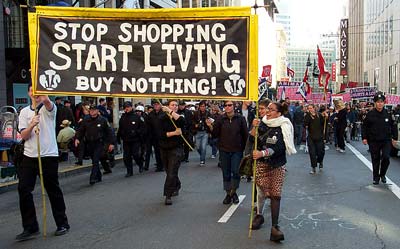
The Buy Nothing movement
B2 Graded ~5 dk okuma 532 kelime

The Buy Nothing movement

Sütunlar:
Yazı:
Uygulamada Aç
🇬🇧

English (Original)

Original Text

Social media, magazines and shop windows bombard people daily with things to buy, and British consumers are buying more clothes and shoes than ever before. Online shopping means it is easy for customers to buy without thinking, while major brands offer such cheap clothes that they can be treated like disposable items – worn two or three times and then thrown away.

In Britain, the average person spends more than £1,000 on new clothes a year, which is around four per cent of their income. That might not sound like much, but that figure hides two far more worrying trends for society and for the environment. First, a lot of that consumer spending is via credit cards. British people currently owe approximately £670 per adult to credit card companies. That's 66 per cent of the average wardrobe budget. Also, not only are people spending money they don't have, they're using it to buy things they don't need. Britain throws away 300,000 tons of clothing a year, most of which goes into landfill sites.

People might not realise they are part of the disposable clothing problem because they donate their unwanted clothes to charities. But charity shops can't sell all those unwanted clothes. 'Fast fashion' goes out of fashion as quickly as it came in and is often too poor quality to recycle; people don't want to buy it second-hand. Huge quantities end up being thrown away, and a lot of clothes that charities can't sell are sent abroad, causing even more economic and environmental problems.

However, a different trend is springing up in opposition to consumerism – the 'buy nothing' trend. The idea originated in Canada in the early 1990s and then moved to the US, where it became a rejection of the overspending and overconsumption of Black Friday and Cyber Monday during Thanksgiving weekend. On Buy Nothing Day people organise various types of protests and cut up their credit cards. Throughout the year, Buy Nothing groups organise the exchange and repair of items they already own.

The trend has now reached influencers on social media who usually share posts of clothing and make-up that they recommend for people to buy. Some YouTube stars now encourage their viewers not to buy anything at all for periods as long as a year. Two friends in Canada spent a year working towards buying only food. For the first three months they learned how to live without buying electrical goods, clothes or things for the house. For the next stage, they gave up services, for example haircuts, eating out at restaurants or buying petrol for their cars. In one year, they'd saved $55,000.

The changes they made meant two fewer cars on the roads, a reduction in plastic and paper packaging and a positive impact on the environment from all the energy saved. If everyone followed a similar plan, the results would be impressive. But even if you can't manage a full year without going shopping, you can participate in the anti-consumerist movement by refusing to buy things you don't need. Buy Nothing groups send a clear message to companies that people are no longer willing to accept the environmental and human cost of overconsumption.

🇹🇷

Türkçe (Çeviri)

Türkçe Çeviri

Sosyal medya, dergiler ve mağaza vitrinleri insanları her gün satın alınacak şeylerle bombardımana tutuyor ve İngiliz tüketiciler her zamankinden daha fazla kıyafet ve ayakkabı satın alıyor. Online alışveriş, müşterilerin düşünmeden satın almasını kolaylaştırırken, büyük markalar o kadar ucuz kıyafetler sunuyor ki bunlar tek kullanımlık eşyalar gibi muamele görebiliyor – iki veya üç kez giyilip sonra atılıyor.

Britanya'da ortalama bir kişi yılda 1.000 sterlinden fazla yeni kıyafete harcıyor, bu da gelirlerinin yaklaşık yüzde dördü. Bu çok gibi görünmeyebilir, ancak bu rakam toplum ve çevre için çok daha endişe verici iki eğilimi gizliyor. İlk olarak, bu tüketici harcamalarının çoğu kredi kartları aracılığıyla yapılıyor. İngilizler şu anda kredi kartı şirketlerine yetişkin başına yaklaşık 670 sterlin borçlu. Bu, ortalama gardırop bütçesinin yüzde 66'sı. Ayrıca, insanlar sadece sahip olmadıkları parayı harcamakla kalmıyor, aynı zamanda ihtiyaç duymadıkları şeyleri satın almak için kullanıyorlar. Britanya yılda 300.000 ton giysi atıyor ve bunların çoğu çöp depolama alanlarına gidiyor.

İnsanlar, istenmeyen kıyafetlerini hayır kurumlarına bağışladıkları için tek kullanımlık giysi sorununun bir parçası olduklarını fark etmeyebilirler. Ancak hayır kurumları tüm bu istenmeyen kıyafetleri satamıyor. 'Hızlı moda' geldiği kadar çabuk modası geçiyor ve genellikle geri dönüştürülemeyecek kadar kalitesiz; insanlar onu ikinci el olarak satın almak istemiyor. Büyük miktarlar çöpe atılıyor ve hayır kurumlarının satamadığı birçok kıyafet yurt dışına gönderilerek daha da fazla ekonomik ve çevresel sorunlara neden oluyor.

Ancak, tüketimciliğe karşı farklı bir eğilim ortaya çıkıyor – 'hiçbir şey satın alma' eğilimi. Bu fikir 1990'ların başında Kanada'da ortaya çıktı ve ardından ABD'ye yayıldı; burada Şükran Günü hafta sonundaki Black Friday ve Cyber Monday'in aşırı harcama ve aşırı tüketiminin bir reddi haline geldi. Hiçbir Şey Satın Alma Günü'nde insanlar çeşitli protestolar düzenliyor ve kredi kartlarını kesiyorlar. Yıl boyunca, Hiçbir Şey Satın Alma grupları, zaten sahip oldukları eşyaların değişimini ve onarımını organize ediyor.

Bu eğilim şimdi, genellikle insanların satın alması için kıyafet ve makyaj gönderileri paylaşan sosyal medya etkileyicilerine ulaştı. Bazı YouTube yıldızları şimdi izleyicilerini bir yıla kadar hiçbir şey satın almamaya teşvik ediyor. Kanada'da iki arkadaş, sadece yiyecek satın almaya yönelik bir yıl geçirdi. İlk üç ay boyunca elektrikli eşya, kıyafet veya ev için eşya satın almadan yaşamayı öğrendiler. Bir sonraki aşamada ise saç kesimi, restoranlarda yemek yeme veya arabaları için benzin alma gibi hizmetlerden vazgeçtiler. Bir yılda 55.000 dolar biriktirmişlerdi.

Yaptıkları değişiklikler, yollarda iki arabanın daha az olması, plastik ve kağıt ambalajda azalma ve tasarruf edilen tüm enerjiden çevre üzerinde olumlu bir etki anlamına geliyordu. Herkes benzer bir planı takip etseydi, sonuçlar etkileyici olurdu. Ancak bir yıl boyunca alışveriş yapmadan duramasanız bile, ihtiyacınız olmayan şeyleri satın almayı reddederek anti-tüketimci harekete katılabilirsiniz. Hiçbir Şey Satın Alma grupları, şirketlere insanların aşırı tüketimin çevresel ve insani maliyetini artık kabul etmeye istekli olmadıklarına dair net bir mesaj gönderiyor.

Önemli Kelimeler & Deyimler

Bu okuma parçasında geçen B2 seviyesindeki kritik kelimeler, deyimler ve pratik kullanımları:

12 İfade
bombard B2
bombardımanda tutmak
to attack continuously with something, often information or requests
disposable items B2
tek kullanımlık eşyalar
items designed to be thrown away after one or a few uses
landfill sites B2
çöp depolama alanları
places where large amounts of waste material are buried
donate B2
bağışlamak
to give money or goods to a charity or organization
charity shops B2
hayır kurumları mağazaları
shops that sell donated goods to raise money for charity
fast fashion B2
hızlı moda
inexpensive clothing produced rapidly by mass-market retailers in response to the latest trends
springing up B2
ortaya çıkmak, hızla gelişmek
to appear or develop quickly and suddenly
consumerism B2
tüketimcilik
the belief that it is good for people to spend a lot of money on goods and services
overconsumption B2
aşırı tüketim
the action or fact of consuming too much
influencers B2
etkileyiciler
people who have the power to affect the purchasing decisions of others because of their authority, knowledge, or relationship with their audience
anti-consumerist B2
anti-tüketimci
opposing the belief that it is good for people to spend a lot of money on goods and services
packaging B2
ambalaj
materials used to wrap or protect goods