
English (Original)
Though she is inextricably linked with the tragic demise of the French monarchy, Marie Antoinette was not a native of the country that would ultimately execute her. Born in 1755 as Maria Antonia Josepha Johanna, she descended from the formidable Habsburg lineage, the daughter of the Empress of Austria and the Holy Roman Emperor. Like many aristocratic females of her era, her education was entrusted to private tutors and heavily focused on morality and religion, leaving her woefully deficient in academic pursuits. By the accounts of her exasperated tutors, she was exceedingly frivolous and rather lazy, struggling to master her native German, let alone the French she was obliged to study. Yet, her personal inclinations were of little consequence to the grand geopolitical chessboard of eighteenth-century Europe. The culmination of the Seven Years’ War had left her mother seeking to solidify an alliance with France. The most potent tool for diplomacy was matrimony. At the tender age of ten, her mother earmarked the heir to the French throne as her future son-in-law, and by fourteen, Antoinette was dispatched to foreign lands to marry Louis Auguste, a boy she had never met.
Her entry into France was a spectacle of unparalleled grandeur. A veritable parade comprising nearly sixty carriages, escorted by over a hundred footmen, journeyed toward a royal retreat nestled in the forests beyond Paris. Before crossing into her new domain, however, she was meticulously transformed; her hair was heavily powdered, her makeup flawlessly applied, and she was adorned in a lavish gown deemed suitable for the ostentatious expectations of the French court. Upon arrival, her youth and impulsivity were immediately apparent. Unable to contain her excitement, the vivacious teenager dashed out of her carriage to curtsy before the King of France, who was thoroughly charmed. Her betrothed, however, stood in stark contrast. Painfully introverted and socially awkward, the future Louis XVI averted his gaze, offered a perfunctory kiss on the cheek, and retreated into silence.
The ensuing wedding on May 16, 1770, held within the resplendent chapel of the Palace of Versailles, was marred by ill omens. Antoinette was draped in a breathtaking gown embellished with diamonds, yet it was disastrously ill-fitting. With the entire court scrutinizing her every move, she was forced to walk down the aisle with her undergarment visibly protruding through the back of her dress. To compound the disaster, when it came time to sign the marriage contract, the trembling bride dripped ink directly over her signature, an incident widely interpreted as a harbinger of doom. Furthermore, despite the intense public scrutiny and the expectations of an entire continent, the marriage remained unconsummated for an agonizing seven years. Historians still debate the precise cause—ranging from physiological impediments to simple adolescent bewilderment—but the glaring lack of intimacy became a subject of international gossip. Antoinette, profoundly homesick and chafing against the rigid, highly publicized customs of Versailles, frequently lamented her unhappiness in letters to her mother, who in turn relentlessly chastised her for failing to fulfill her marital duties.
The fundamental incompatibility of the royal couple only exacerbated their estrangement. Louis was solitary and ascetic, preferring the quiet pursuits of hunting and locksmithing; he frequently retired to bed before midnight. Conversely, Antoinette possessed an insatiable appetite for socialization, hosting opulent masquerades and revelries that lasted until dawn. It was not until Antoinette’s brother intervened, visiting France to counsel the oblivious king, that the couple finally consummated their union. By this time, Louis’s grandfather had passed away, and the young couple ascended the throne. At a mere twenty-one years old, Marie Antoinette was Queen of France.
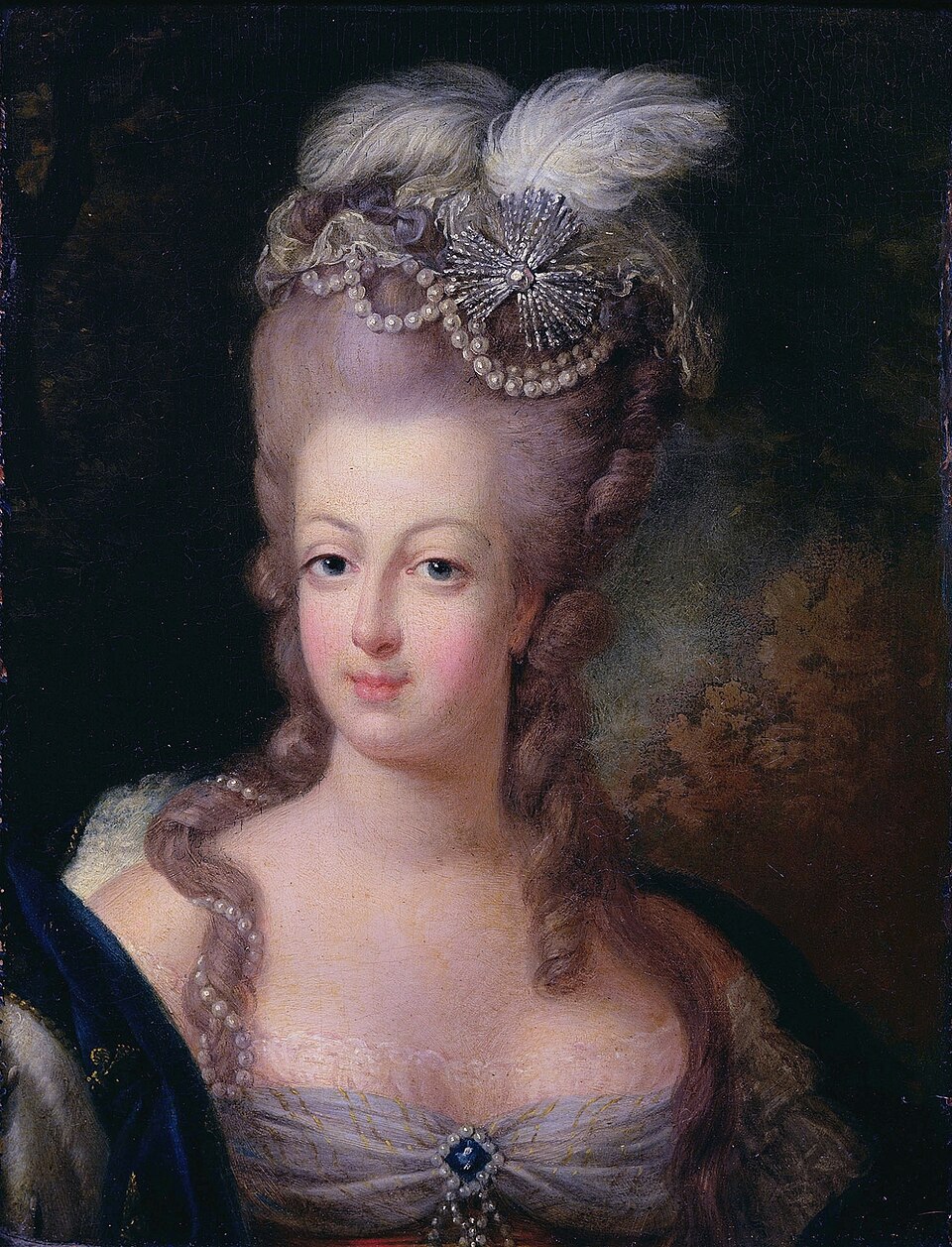
As queen, her penchant for extravagance reached unprecedented heights, much to the dismay of her increasingly critical mother. Antoinette’s style became the epitome of opulence. Her intricately coiffed hair was sculpted feet into the air, adorned with miniature vases of water to keep fresh flowers alive, and her diamond bracelets rivaled the cost of Parisian mansions. Getting dressed was an elaborate theatrical production involving retinues of maids and endless selections of silk and lace. Meanwhile, beyond the gilded gates of Versailles, the people of France were starving. The late 1770s brought catastrophic agricultural failures; grain prices skyrocketed, and the peasantry rioted in the streets over the scarcity of bread. Although she never actually uttered the infamous phrase "Let them eat cake," her sheer indifference to the plight of her subjects was palpable.
Rather than curtailing her expenditures, the queen funneled an astronomical two million francs into the construction of her private sanctuary, the Petit Trianon. She cultivated an artificial rustic village complete with fake farmhouses that masked interiors of profound luxury, featuring silk hangings, billiard tables, and fine porcelain. This exclusive retreat fueled rampant speculation and venomous gossip. Pamphlets depicting the queen as a depraved traitor began to circulate, exacerbating the burgeoning hatred directed at the monarchy. Rumors of infidelity were widespread, particularly regarding her intense emotional entanglement with the dashing Swedish diplomat Axel de Fersen. Recently decoded letters have since confirmed the depth of their illicit romance, revealing profound declarations of mutual adoration.
The simmering resentment of the populace finally boiled over in 1789. The storming of the Bastille on July 14 signaled the dawn of the French Revolution, demonstrating the lethal power of an enraged citizenry. By October, an armed mob of thousands, comprised largely of desperate women demanding bread, marched upon Versailles. The furious crowds breached the palace gates, massacring the royal bodyguards and forcing the terrified royal family to relocate to Paris under armed escort. Even in captivity, Antoinette's fatal flaw—her unyielding attachment to luxury—doomed their desperate bid for survival. In 1791, aided by Fersen, the royal family orchestrated a clandestine escape to the Netherlands. However, blatantly ignoring the advice to travel inconspicuously, Antoinette insisted on utilizing heavy, ostentatious carriages equipped with a full silver dining service and a wine chest. Their sluggish pace and conspicuous wealth led to their swift capture by a vigilant peasant.
The failed flight obliterated any remaining public sympathy. Confined to the grim Temple Tower, the millennium-old French monarchy was officially abolished, replaced by a radical republic. The discovery of Antoinette’s treasonous correspondence with foreign powers, begging for military intervention, sealed their tragic fate. King Louis XVI was subjected to a show trial and decapitated by the guillotine before a roaring crowd. Months later, the newly widowed queen, aged only thirty-seven, faced her own tribunal. Convicted of treason and theft after a cursory two-day trial, she was stripped of all her former glory. With her hair shorn and her hands bound, she endured one final, humiliating procession through the jeering streets of Paris. As she ascended the wooden steps of the scaffold, a priest implored her to find courage. With a lifetime of spectacular highs and agonizing lows behind her, she merely replied that after displaying courage for so many years, she would not lose it in the moment her suffering was finally meant to end. With the swift drop of the blade, the tragic life of Marie Antoinette was abruptly extinguished, serving as the ultimate cautionary tale of royal excess.